Introduction
Electric pressure cookers have fundamentally changed how many households approach meal preparation over the past decade. What once seemed like a niche kitchen tool has become a staple for busy professionals, growing families, and home cooks looking to simplify their routines. The Instant Pot Duo 7-in-1 represents one of the more popular multi-function models on the market, combining several cooking methods into a single appliance.
Understanding what this type of equipment can do—and equally important, what it can’t—helps you make an informed decision about whether it fits your cooking style and lifestyle. This guide walks through the practical aspects of this particular model, exploring its capabilities, suitable use cases, and the considerations that matter when evaluating such an appliance.
Rather than focusing on subjective assessments, we’ll examine the features, functionality, and real-world applications that make electric pressure cookers appealing to various types of home cooks.
What Is a 7-in-1 Electric Pressure Cooker?
Before diving into specifics about this model, it helps to understand what “7-in-1” actually means in the context of kitchen appliances.
The number refers to the different cooking functions contained within a single device. Instead of owning separate appliances for pressure cooking, slow cooking, steaming, and other methods, a multi-function model consolidates these capabilities. This appeals to people with limited kitchen space, those who prefer consolidated equipment, or anyone wanting to reduce their overall appliance footprint.
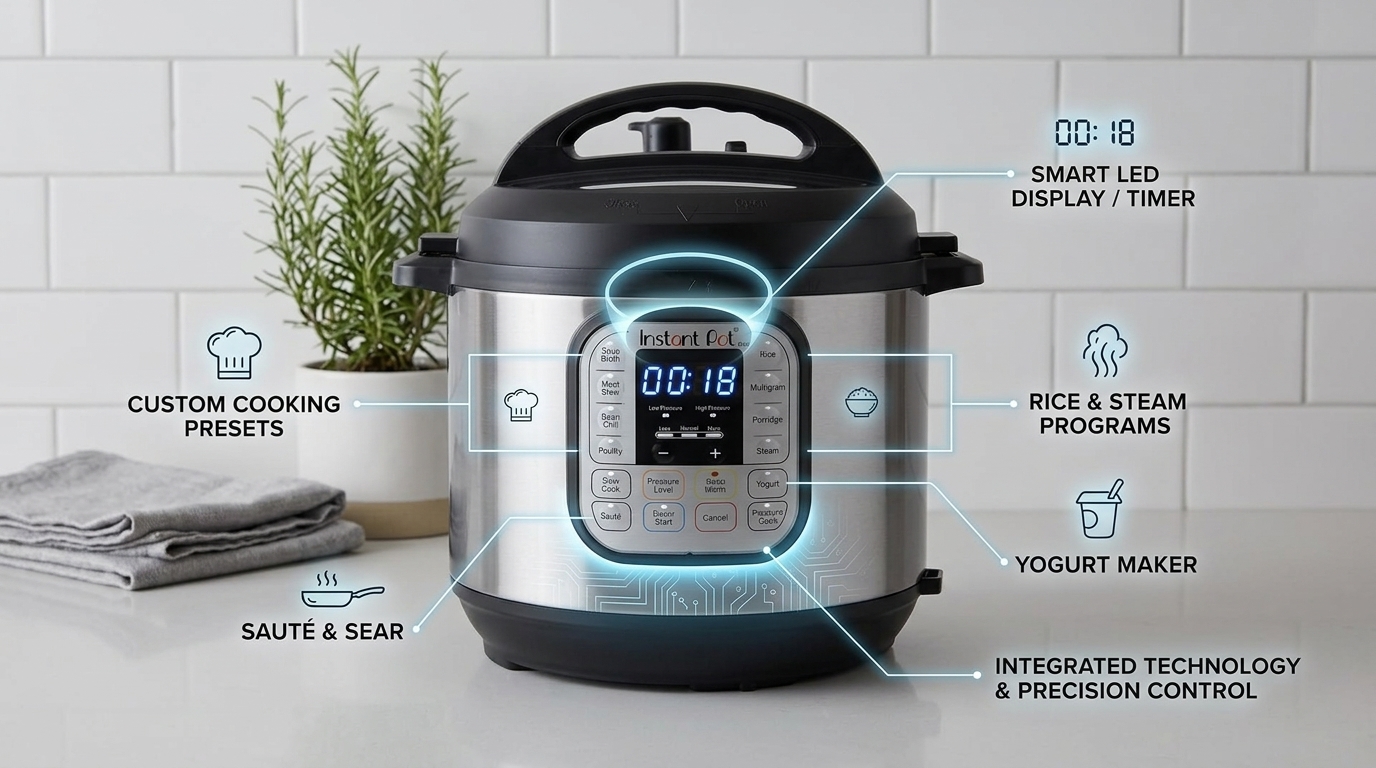
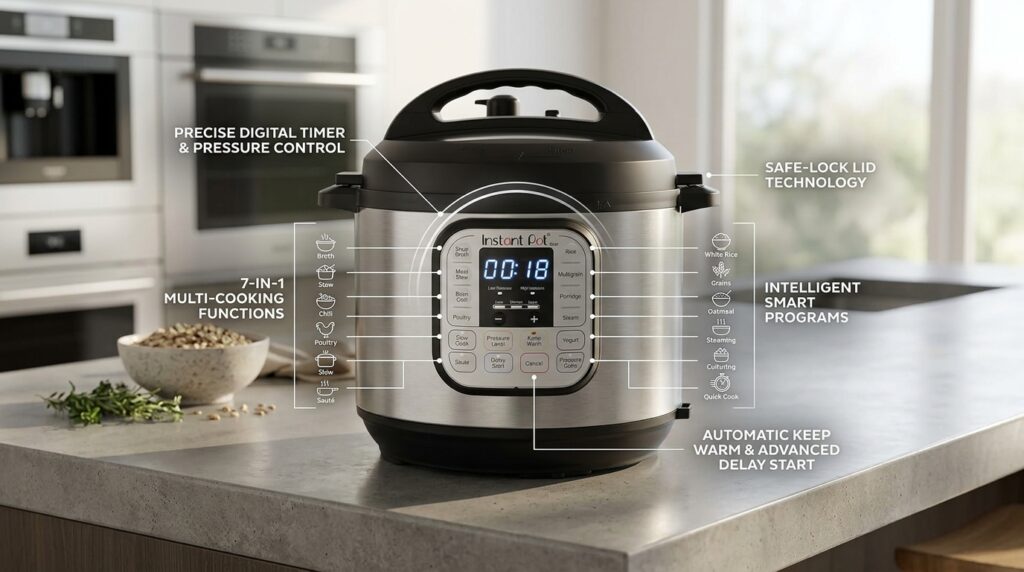
The Instant Pot Duo specifically combines electric pressure cooking, slow cooking, rice cooking, steaming, sautéing, yogurt making, and a keep-warm function. A sterilizing cycle represents the seventh function, useful for sanitizing baby bottles, jars, or other items.
The 6-quart capacity means the cooking chamber holds significantly more food than smaller models—roughly twice the volume of 3-quart versions. This capacity difference matters considerably depending on household size and cooking habits.
Key Features of the Duo 7-in-1 Model
Stainless Steel Construction
The outer housing and cooking vessel are stainless steel, which influences both durability and appearance. Stainless steel resists rust better than other materials and develops a patina over time that many find aesthetically neutral or even appealing in kitchen settings. It’s also relatively easy to wipe clean from the outside, though fingerprints do show on stainless surfaces more readily than on other finishes.
The inner cooking pot is also stainless steel, which conducts heat evenly and doesn’t require seasoning or special maintenance like cast iron. Unlike non-stick surfaces, stainless steel is more durable against scratches from utensils, though some people find that food occasionally sticks during sautéing if oil or fat isn’t used adequately.
Pressure Cooking Functionality
Electric pressure cookers work by trapping steam inside a sealed chamber, which raises the internal pressure and temperature above what’s possible with boiling water alone. This accelerates cooking times for many foods—typically by about 30 percent compared to conventional cooking methods.
The Duo model includes both high and low pressure settings. High pressure cooks faster and suits most recipes. Low pressure is useful for delicate foods that might otherwise break apart or overcook, such as certain vegetables or fish.
The appliance includes multiple safety features standard to modern electric pressure cookers: release valves, pressure sensors, and automatic depressurization options that prevent the lid from opening until pressure has safely dissipated.
Slow Cooking Capability
The same vessel that functions as a pressure cooker also works as a slow cooker on either low or high heat settings. This means recipes traditionally requiring a dedicated slow cooker—like pot roasts, stews, or bone broths that benefit from long, gentle cooking—can be prepared in this device.
The slow cooking function works without pressurization, simply maintaining a steady, gentle heat. For people who find slow cookers useful but don’t want a separate appliance taking up cabinet space, this dual functionality provides genuine convenience.
Rice Cooking Program
A dedicated rice setting automatically adjusts cooking time and heat based on the rice type and quantity. This removes guesswork from achieving consistent results with white rice, brown rice, or other varieties.
Many electric pressure cooker users find this function particularly useful because rice can be tricky to perfect on a stovetop—it’s easy to end up with either crunchy undercooked rice or mushy, waterlogged grains. An automated program eliminates most of this variability.
Steaming Function
The steaming capability uses a rack insert that holds food above water, cooking it via steam rather than direct heat or pressure. This method preserves nutrients better than boiling and works well for vegetables, dumplings, seafood, or reheating prepared foods without drying them out.
The steaming function doesn’t pressurize—it’s simply moist heat. This makes it useful for foods that don’t work well with pressure cooking, or for situations where you want gentler cooking.
Sauté Mode
The sauté setting allows browning and searing food directly in the cooking vessel before or after pressure cooking. This eliminates the need to use a separate pan for browning meat or aromatics like onions and garlic.
From a practical standpoint, this feature reduces cleanup by keeping everything in one pot. It also means browning happens in the same vessel where pressure cooking will occur, so no transferring between containers. Some cooks appreciate this efficiency; others find the wide, open-topped pot less ideal for sautéing than a traditional skillet because of the heat distribution and the edges of the pot.
Yogurt Making
The yogurt function maintains a precise, warm temperature needed to ferment yogurt cultures. Rather than requiring a dedicated yogurt maker or carefully managing temperature in an oven, this function automates the process.
For people who make yogurt regularly—which can save money compared to regularly purchasing yogurt—this feature adds meaningful value. For occasional yogurt makers, it’s less critical since yogurt can be made through other methods with slightly more attention.
Keep-Warm and Sterilizing Functions
A keep-warm setting maintains food at a safe temperature after cooking finishes. This is useful if dinner preparations aren’t synchronized, or if you’re cooking for a crowd and want components ready at different times.
The sterilizing function heats the contents to a temperature and duration suitable for sanitizing bottles, jars, or small items. Families with infants or anyone doing home canning might find this function useful; others may never need it.
Mobile App Integration
The Instant Pot app provides access to recipe guides, cooking instructions, and customizable settings that sync with the device. The model specification mentions over 800 recipes available through the app.
An app doesn’t actually change how the appliance cooks, but it does provide a centralized place for recipes and can serve as a reference guide. Some find this convenient; others prefer traditional recipe sources or don’t benefit from app connectivity.
How the 6-Quart Size Changes Cooking
The 6-quart capacity deserves separate consideration because it’s significantly larger than entry-level models.
A 6-quart cooking vessel means you can prepare larger batches of soups, stews, chili, or other one-pot dishes. This appeals to families with multiple members, meal preppers who batch-cook for the week, or anyone who regularly feeds groups of people.
However, the larger size also means the appliance takes up more counter and storage space. The electrical footprint requires more clearance from walls and cabinets. For people with compact kitchens, this could be a meaningful limitation.
The larger capacity also influences cooking times slightly. Some foods take marginally longer to pressurize when the vessel contains a bigger batch, though in many cases the time difference is minimal—a few minutes at most.
Practical Applications and Cooking Scenarios
One-Pot Meals
The pressure cooker excels at dishes traditionally requiring hours of stovetop simmering. Beef stew, chicken soup, chili, and similar preparations often complete in a quarter to a third of the time. This appeals to people working with limited time during evenings or weekends.
The consistency of results also matters. Because pressure cooking controls temperature and moisture precisely, you get repeatable outcomes across different attempts of the same recipe.
Meal Preparation and Batch Cooking
The 6-quart capacity makes this model particularly useful for batch cooking. Someone planning to prepare a week’s worth of proteins, grains, or components can cook substantial quantities at once, then portion and refrigerate or freeze for later use.
This approach saves time during busy weeknights and reduces the number of cooking sessions needed across a week.
Tenderizing Tough Cuts of Meat
Pressure cooking excels at breaking down connective tissue in inexpensive or less tender cuts of meat. Pot roasts, brisket, or other historically challenging cuts become tender relatively quickly through pressurized cooking.
This capability appeals to budget-conscious cooks who want to use less expensive protein sources without sacrificing texture or flavor.
Legume and Bean Preparation
Dried beans require soaking and long cooking times on a stovetop. An electric pressure cooker can cook dried beans to tenderness in a fraction of the time, without advance soaking if you prefer.
For people who incorporate dried beans regularly into their diet—whether for budget reasons, dietary preferences, or cultural cuisines—this significantly reduces preparation time.
Grain Cooking
Beyond just rice, the pressure cooker works well for other grains: quinoa, farro, barley, or lentils. The automated nature of cooking means less stirring and monitoring than stovetop preparation.
Bone Broth and Stock Production
The slow cooking function works particularly well for extended cooking times needed to extract collagen and nutrients from bones. Broths that take eight to twelve hours on a stovetop can be prepared during convenient times without monitoring.
Who This Equipment May Suit
Busy Professionals and Families
Someone working full-time with family responsibilities often faces time constraints that make weeknight cooking challenging. The pressure cooker shortens preparation times, appealing directly to this group.
People with Limited Kitchen Space
The consolidation of seven functions into one appliance means someone can eliminate multiple separate devices: a slow cooker, rice cooker, yogurt maker, and steamer. For apartment dwellers or anyone with limited cabinet and counter space, this efficiency matters.
Batch Meal Preppers
The 6-quart capacity is particularly well-suited to someone planning a week’s worth of meals in advance. A single session can produce enough of a particular component—say, shredded chicken or cooked beans—to use across several different meals throughout the week.
Home Cooks Interested in Fermentation
People who make yogurt regularly find genuine value in the dedicated yogurt function. The precise temperature control takes the guesswork out of fermentation.
Budget-Conscious Households
Using tougher, less expensive cuts of meat and dried legumes becomes more practical when an appliance can tenderize them efficiently. Over time, this can impact grocery spending.
Parents of Infants
The sterilizing function holds specific appeal for families with babies, particularly in early months when sterilization of bottles and equipment is important. However, this is a niche use case and wouldn’t justify a purchase on this capability alone.
Important Considerations Before Purchasing
Storage and Counter Space
The Duo 7-in-1 at 6-quart capacity is not a compact appliance. It requires adequate counter space during use and storage space when not in use. Anyone with a small kitchen should measure available space carefully.
Learning Curve
While electric pressure cookers have become more user-friendly, there’s still a moderate learning curve. Understanding pressure release methods, when to use high versus low pressure, and how to adapt favorite recipes takes time and often involves consulting guides or testing recipes.
Someone who enjoys cooking and exploring new techniques might find this engaging. Someone seeking a set-it-and-forget-it solution might find it more complex than anticipated.
Recipe Adaptation
Not all recipes work perfectly in a pressure cooker. Thickening sauces, monitoring texture, and adapting cooking times from conventional recipes requires experimentation. Many recipes work great; some require modification or don’t translate well.
Cost and Durability Expectations
Electric pressure cookers represent a meaningful investment compared to many small appliances. The durability over years depends on usage patterns and maintenance. Most people find these appliances last several years with normal use, but they’re not inexpensive to replace if something breaks.
Dietary and Allergy Considerations
For people with severe allergies or who prepare very different meals for household members with different dietary needs, the single-vessel cooking method might be limiting. Some cross-contamination risks are inherent to shared cooking equipment.
Noise Level
Electric pressure cookers produce noise—the hissing of steam release, beeping of alerts, and mechanical sounds. Anyone sensitive to kitchen noise or living in close quarters should be aware that this isn’t a silent appliance.
Electricity Requirements
The device requires a standard outlet. Unlike gas cooking, which functions during power outages, electric pressure cookers depend on consistent electrical supply. In areas with frequent power issues, this could be a consideration.
Comparison with General Cooking Method Categories
Electric Pressure Cookers vs. Stovetop Methods
Stovetop cooking offers flexibility and immediate responsiveness to adjustments. You can taste-test during cooking and modify heat instantly. Pressure cookers trade this flexibility for speed and consistency. Once pressurized, adjustments are limited.
For simple dishes like boiling pasta or sautéing vegetables, stovetop cooking remains faster and simpler. For complex, long-cooking dishes, pressure cooking typically wins on time.
Electric Pressure Cookers vs. Slow Cookers
Dedicated slow cookers often provide larger cooking surfaces and are sometimes cheaper than multi-function models. They’re also simpler—no learning curve with pressure settings. However, they require advance planning (many recipes need eight hours or more), and they’re single-purpose appliances.
A pressure cooker with slow cooking capability offers both time-efficient and slow-cooking options in one device, providing flexibility that pure slow cookers don’t.
Electric Pressure Cookers vs. Conventional Ovens
Oven cooking, particularly for baking or roasting, remains superior to pressure cooking for many applications. Pressure cookers can’t replicate the browning and textural results of oven cooking. However, for braises, soups, and stews, the pressure cooker often provides better results faster.
6-Quart vs. Smaller Capacity Models
Larger capacity means fewer cooking sessions for batch preparation but requires more space. Smaller models are more compact and heat up faster but require multiple sessions for significant batch cooking. The right choice depends on household size, available space, and cooking patterns.
Frequently Asked Questions
Can you use the pressure cooker for baking or roasting?
No. The pressure cooker’s sealed environment doesn’t allow the air circulation necessary for baking. While some people have adapted recipes (like cheesecake cooked in jars inside the pressure cooker), this isn’t a primary function. A regular oven remains necessary for baking.
How long does it take to pressurize and depressurize?
This varies based on the volume of food and liquid. Typically, pressurization takes five to fifteen minutes depending on content volume. Depressurization can be immediate (quick release) or gradual (natural release, which might take fifteen to thirty minutes). Recipes specify which method to use.
Is the device difficult to clean?
The inner pot is stainless steel and dishwasher safe, making cleaning straightforward. The outer housing wipes clean with a damp cloth. Some rubber gaskets require occasional cleaning and occasional replacement (typically annually or as needed). Overall, cleaning isn’t significantly more complicated than other cookware.
Can you open the lid during cooking?
No. Modern electric pressure cookers have safety mechanisms that prevent lid opening while pressurized. You can open it after pressure has released according to the appliance’s instructions.
What happens if you don’t add enough liquid?
Electric pressure cookers require minimum liquid amounts to generate steam and prevent burning. If insufficient liquid is used, the appliance will sense this and may fail to pressurize or shut off. Following recipe liquid amounts is important.
Is it safe to use?
Modern electric pressure cookers include multiple safety features: pressure release valves, sensors that prevent lid opening while pressurized, and automatic depressurization if pressure exceeds safe levels. They’re considerably safer than older stovetop pressure cookers. However, basic safety precautions still apply—following instructions, not forcing the lid open, and using appropriate techniques for pressure release.
Can frozen food be cooked directly?
Generally, no. Most recipes require thawed food because cooking times are calculated for that. Frozen food requires longer cooking times that need to be researched or experimented with. Many users thaw protein and other ingredients before cooking.
What’s the warranty situation?
Warranty details vary based on where and when the unit is purchased, so checking with the retailer or manufacturer is important. Most units come with at least a basic limited warranty covering defects.
Does the app connectivity require internet?
The app functions with internet connectivity. Some features may be limited without it. If you lack reliable internet or prefer not to use app connectivity, the appliance functions as a standalone device using the control panel buttons and screen.
How often do seals need replacing?
The silicone gasket that creates the pressure seal can degrade over time with regular use. Most people find they need replacement every twelve to twenty-four months depending on usage frequency. Replacement gaskets are inexpensive and widely available.
Conclusion
An electric pressure cooker represents a shift in cooking approach more than an incremental improvement to existing methods. It trades flexibility and the sensory engagement of traditional cooking for speed and consistency. For someone whose primary constraints are time or kitchen space, this trade-off often makes sense. For someone who prioritizes the experiential aspects of cooking or has very specific textural requirements, the compromises might matter more.
The Instant Pot Duo 7-in-1 specifically consolidates multiple cooking functions into one device, and the 6-quart capacity appeals to people cooking for larger households or those batch-cooking across weeks. The stainless steel construction offers durability, and the over 800 recipes available through the app provide a starting point for exploring what the device can do.
Whether this particular model matches your needs depends on your kitchen space, cooking style, household size, and what you typically prepare. If you’ve considered a pressure cooker but hesitated on the learning curve or the appliance footprint, understanding what these devices actually do—and recognizing both where they excel and where they have limitations—helps clarify whether one belongs in your kitchen.