Introduction
Food preservation has been a cornerstone of home cooking and sustainability for generations. Among the various methods available—freezing, drying, fermentation, and refrigeration—pressure canning stands out as one of the most reliable approaches for long-term storage of low-acid foods. For those interested in canning at home, understanding the equipment available can make the difference between a frustrating experience and a successful, rewarding process.
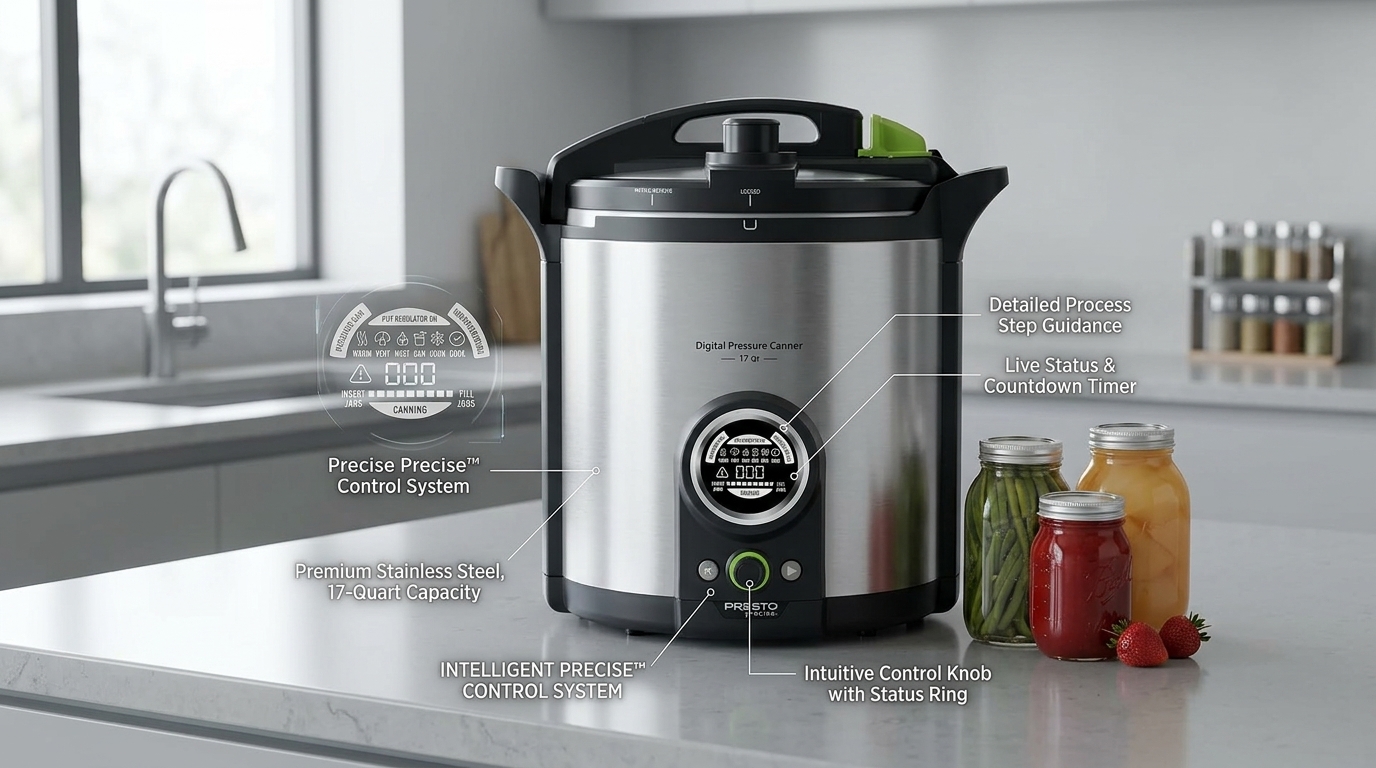
The Presto 02152 17-quart digital pressure canner represents one of the options available in the home canning market. This guide explores what this equipment offers, how it functions, and what you should consider if you’re thinking about starting or expanding your canning practice.
Understanding Pressure Canning and Its Role in Food Preservation
Before diving into the specifics of any particular pressure canner, it helps to understand what pressure canning actually does and why it matters.
Pressure canning differs fundamentally from water bath canning. While water bath canning reaches temperatures around 212°F (100°C), pressure canning achieves much higher temperatures—typically between 240°F and 250°F (116°C to 121°C)—by using steam pressure to increase the boiling point of water inside a sealed chamber. This higher temperature is essential for destroying bacterial spores, particularly those of Clostridium botulinum, which causes botulism.
Low-acid foods—including vegetables, meats, seafood, and some mixed dishes—require this higher temperature to be safely preserved. High-acid foods like jams, pickles, and tomato-based products can be safely processed in a water bath canner, but low-acid foods cannot. This distinction is crucial for food safety, which is why pressure canning equipment serves such an important role in home preservation.
Overview: What Is the Presto 02152?
The Presto 02152 is an all-American pressure canner designed for home use. Presto, a company with a long history in canning equipment, manufactures this model with a 17-quart capacity. The “02152” designation is the manufacturer’s model number, helping distinguish it from other products in their lineup.
This is not a pressure cooker—an important distinction. While pressure cookers are designed for cooking food quickly, pressure canners are engineered for the specific task of preserving food safely in jars. The two serve different purposes and operate according to different specifications.
Key Features and Specifications
Capacity and Physical Dimensions
The 17-quart capacity represents a substantial amount of working space. To put this in perspective, a 17-quart canner can typically process up to 7 quart-sized jars or more pint-sized jars in a single batch, depending on the specific product being canned. The larger capacity means fewer batches are needed when processing substantial quantities of food—a practical advantage when you’re working with seasonal produce or bulk meat.
Digital Pressure Gauge
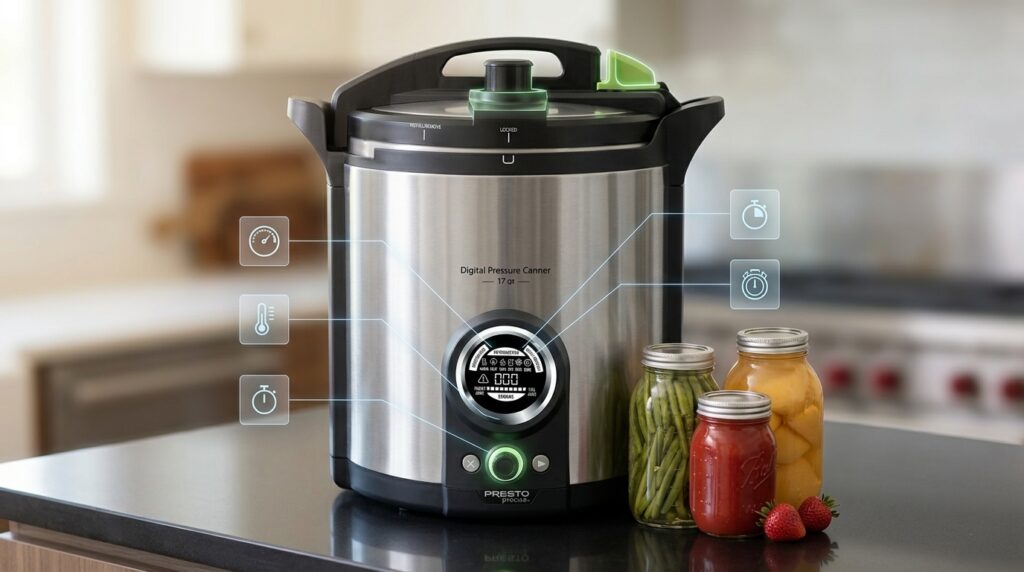
Unlike older pressure canner models that relied solely on weighted gauges or dial gauges, the digital display on the 02152 provides a numerical readout of the internal pressure. This allows canners to monitor pressure in real-time without interpreting gauge positions or listening for specific rocking patterns. The digital interface simplifies the monitoring process and removes some of the guesswork that can occur with traditional analog gauges.
Material Construction
Pressure canners require materials that can withstand repeated heating, pressurization, and cooling cycles without degrading. The construction materials used affect both the longevity of the equipment and how it performs during the canning process.
Safety Release Mechanisms
Modern pressure canners incorporate multiple safety features. These typically include a vent pipe (for releasing air initially), an overpressure plug designed to release pressure if internal pressure becomes excessive, and a gasket that helps create a seal while allowing pressure release if needed.
How Pressure Canning Works: The Process
Understanding the mechanics helps explain why pressure canning works and why following specific procedures matters.
The Initial Stage
When you begin the canning process, the vent pipe at the top of the canner remains open. As you heat the canner and the water inside reaches boiling, steam escapes through this opening. This initial venting phase is crucial—it removes air from the chamber. Air has a lower heat capacity than steam, so allowing air to escape ensures that the processing environment is primarily steam, which transfers heat more effectively.
The Pressurization Phase
Once you’ve vented appropriately (typically for 10 minutes), you close the vent pipe. As heating continues and steam builds up inside the sealed chamber, pressure increases. The amount of pressure depends on the altitude and the temperature you’re achieving. At sea level, 10 pounds of pressure per square inch (PSI) corresponds to approximately 240°F, while 15 PSI corresponds to approximately 250°F.
Different products require different processing pressures and times. These parameters are determined by research conducted by the USDA and universities with food science programs. Following these guidelines precisely is essential because the combination of temperature and time is what ensures that dangerous bacteria are eliminated.
The Processing Phase
Once the canner reaches the correct pressure, you maintain that pressure for the required processing time. During this phase, the sealed jars inside experience consistent heat that penetrates from the outside inward. The heat kills microorganisms and inactivates enzymes that could otherwise cause spoilage.
Cooling and Depressurization
After processing time is complete, the heat is turned off. The canner is allowed to cool naturally, with pressure gradually decreasing. Rapidly depressurizing—by forcing pressure out—can cause liquid from the jars to siphon into the canner, resulting in loss of product and potentially compromising the seal.
Practical Applications and Use Cases
Pressure canning becomes relevant for anyone interested in preserving a specific range of foods.
Vegetable Preservation
Home gardeners or those who purchase vegetables in bulk often turn to pressure canning for preserving the harvest. Green beans, corn, carrots, beets, and other vegetables can all be pressure-canned. Many people find that home-canned vegetables offer flavors that differ from commercially canned alternatives, often with textures that better suit their preferences.
Meat and Seafood Preservation
Pressure canning is one of the few methods suitable for safely preserving meat and seafood at room temperature. Ground meats, poultry, and fish can all be processed this way. This opens possibilities for preserving game, preparing ready-to-use ingredients for quick meals, and reducing food waste when unexpected quantities become available.
Bone Broths and Stocks
Making bone broth is popular in many dietary approaches, and having shelf-stable broths on hand offers convenience. Pressure canning allows broths to be preserved without freezer space, which appeals to those with limited refrigeration or who prefer the shelf-stable storage option.
Combination Dishes
Soups, stews, and chili can be canned if formulated properly. The ability to have ready-made meals that need only to be heated represents a significant convenience factor for many households.
Small-Scale Food Business
Some people use home canning as part of a small agricultural or food preservation business. State regulations vary regarding what can be produced in a home kitchen for sale, but understanding pressure canning opens those possibilities.
Who This Equipment May Be Suitable For
Serious Home Gardeners
If you maintain a substantial garden and want to preserve your harvest beyond freezing, pressure canning becomes a practical preservation method. The 17-quart capacity accommodates moderate production volumes without requiring multiple small batches.
Homesteaders and Self-Sufficiency Enthusiasts
People pursuing homesteading and food self-sufficiency often incorporate canning as part of their broader practice. The ability to preserve meat, broth, and vegetables supports their goal of reducing commercial food purchases.
Families with Specific Dietary Needs
Individuals managing specific diets sometimes benefit from being able to prepare and preserve shelf-stable foods according to their exact specifications. Pressure canning allows customization in ways that commercial canned products don’t.
People Exploring Food Preservation
Even if you’re new to preservation, pressure canning deserves consideration if you have interest in low-acid foods. The learning curve exists, but the satisfaction of successfully preserving food makes the effort worthwhile for many practitioners.
Bulk Purchasers
When produce, meat, or seafood becomes available at favorable prices or in large quantities, pressure canning provides a practical way to preserve these purchases.
Important Considerations Before Getting Started
Learning Curve and Resources
Pressure canning requires more precision than other preservation methods. You need to understand:
- Which foods require pressure canning (low-acid foods) versus which can use water bath methods
- Appropriate processing times and pressures for specific products
- Correct jar filling procedures and headspace requirements
- Altitude adjustments, if you live at elevation
The good news is that extensive resources exist. The National Center for Home Food Preservation, university extension offices, and established canning guides provide thoroughly researched procedures. Taking time to study these resources before starting prevents costly mistakes and ensures food safety.
Kitchen Space
A 17-quart canner is a substantial piece of equipment. It requires counter or stovetop space for operation, plus storage space when not in use. Considering where this equipment fits into your kitchen workflow is practical planning.
Heat Source Compatibility
Pressure canners require adequate heat to reach and maintain the necessary temperature and pressure. Smooth-top electric ranges sometimes present challenges with older pressure canner models, though many modern designs work acceptably. If you have an unusual heat source—such as a limited power situation or specialized cooking equipment—checking compatibility is important.
Time Commitment
The actual process takes time. Preparing food, filling jars, processing, cooling, and checking seals represents several hours for a batch. This is worth it for many people, but it’s realistic to understand the time investment.
Cost Evaluation
The equipment requires initial investment. Additionally, you need jars, lids, and sometimes specific ingredients or ingredients in bulk. Evaluating whether the cost aligns with your food preservation goals makes sense, especially when starting out.
Altitude Adjustments
If you live at significant elevation, processing requirements change. Higher altitudes require higher pressure and sometimes longer processing times. The USDA provides tables for these adjustments, and ignoring them compromises food safety.
Pressure Canning Compared to Other Food Preservation Methods
Versus Water Bath Canning
Water bath canning is simpler and requires less specialized equipment, making it accessible to more people. However, it only works for high-acid foods. Pressure canning expands the range of foods that can be safely preserved, though it involves more complexity and equipment cost.
Versus Freezing
Freezing is often easier and preserves texture better in many cases. However, it requires continuous electricity and adequate freezer space. Pressure canning creates shelf-stable products that don’t depend on power availability, which appeals to many people.
Versus Dehydrating
Dehydration works well for certain foods like herbs, fruits, and vegetables. It requires less heat and energy than canning but produces different products. Both methods have their place in a comprehensive preservation strategy.
Versus Commercial Preservation
Commercial canning operates at industrial scale with different equipment and procedures. Home canning produces results that reflect your specific preferences but requires your direct involvement and adherence to safety protocols.
Safety Features and Standards
Modern pressure canning equipment incorporates multiple safeguards designed to prevent accidents.
The overpressure plug (or safety plug) releases pressure automatically if internal pressure becomes excessive—preventing explosions or lid rupture. The vent pipe serves multiple functions: allowing initial air release, preventing pressure from building in a blocked system, and releasing pressure if anything goes wrong.
The gasket creates a seal that’s effective but not so tight that pressure cannot be released if needed. Over time, gaskets may deteriorate and require replacement—a normal maintenance item.
The lid is designed to seat properly and distribute pressure evenly. The design itself contributes to safety by ensuring that pressure is controlled and directed through proper channels.
Equipment manufactured by established companies like Presto has typically undergone testing to ensure it meets industry standards. Understanding these safety features builds confidence in the equipment and emphasizes why proper use and maintenance matter.
Maintenance and Longevity
Like any kitchen equipment, a pressure canner benefits from proper care.
Regular Cleaning
After each use, the interior should be washed thoroughly to remove any food residue or mineral deposits. The lid should be hand-washed and dried. Hard water can leave deposits that affect performance, so if you have hard water, occasional deeper cleaning with white vinegar may help.
Gasket Care
The rubber gasket is a wear item. Over time—typically after several years of use—it may need replacement. Many manufacturers, including Presto, sell replacement gaskets. A gasket that’s not sealing properly will prevent the canner from building pressure and should be replaced immediately.
Pressure Gauge Accuracy
Dial gauges can drift over time. Some manufacturers offer gauge checking services, or you can have your gauge tested through extension offices or equipment dealers. Digital gauges are generally less prone to drift but should still perform consistently.
Storage
When not in use, the canner should be stored in a dry location. The lid is often stored inverted or on its side to prevent gasket deformation.
Frequently Asked Questions
What’s the difference between a pressure canner and a pressure cooker?
The primary differences involve design and intended use. Pressure cookers prioritize speed and convenience for cooking; they operate at higher pressures and aren’t engineered with the precise controls needed for canning. Pressure canners are designed specifically for food preservation and typically have lower operating pressures. Using a pressure cooker for canning isn’t recommended because it doesn’t provide the precise temperature and pressure control that food safety requires.
How long will food last when pressure-canned?
Quality doesn’t improve over time, but many canned foods remain safe and palatable for one to two years or even longer if stored properly. Environmental factors like temperature fluctuations and light exposure affect shelf life. Cooler, dark storage locations preserve quality longest.
Can I use this on an induction cooktop?
Compatibility depends on the specific cooktop and canner design. Some modern pressure canners work with induction heat, while others may not. Checking manufacturer recommendations before purchase is wise if you have an induction cooktop.
What if I live at high altitude?
Processing requirements change at elevation. Higher altitude requires higher pressure and sometimes longer processing times. The USDA provides detailed tables for altitude adjustments. Using these tables correctly is essential for safety.
Do I need special jars?
Home canning jars (often called Mason jars) are designed specifically for canning. They’re tempered to withstand the stress of pressure and heating. Ordinary jars aren’t suitable. New lids are required for each canning session, but jars and bands can be reused multiple times if they remain undamaged.
How do I know if a seal was successful?
As jars cool, the center of the lid becomes concave (curved inward) if a good seal formed. Once fully cooled, you should not be able to pry the lid off—it should be firmly seated. If the lid flexes or pops when pressed, the seal failed and the contents need to be reprocessed or refrigerated.
Is pressure canning difficult?
It requires attention to detail and understanding proper procedures, but it’s not beyond the reach of careful, motivated people. Many individuals successfully begin canning without extensive prior experience. Taking time to learn from established resources prevents problems.
Can I can dairy products?
Most dairy products are difficult or impossible to can safely at home. The science of pressure canning dairy is complex, and the USDA doesn’t provide tested procedures for most dairy products. Butter is an exception that can be canned, but milk-based products are generally not recommended for home canning.
What should I do if something goes wrong during processing?
If you notice pressure dropping significantly or you hear hissing, turn off the heat and allow the canner to cool naturally without forcing pressure release. Once cooled, assess the situation. If a seal has broken, contents may need to be reprocessed or refrigerated depending on how long they’ve been processing.
Conclusion
The Presto 02152 17-quart digital pressure canner represents a substantial piece of food preservation equipment that opens possibilities for safely preserving a range of foods—particularly low-acid foods like vegetables, meats, and broths—that can’t be safely preserved using simpler methods like water bath canning.
Success with pressure canning hinges on understanding the process, following established safety protocols, and taking time to learn proper procedures. The equipment itself is just one component; knowledge and attention to detail matter equally.
For those with interest in food preservation, a home garden, bulk purchasing, or simply reducing dependence on commercial canned goods, pressure canning offers genuine value. The learning curve is real but manageable, and many people find the practice deeply satisfying.
If you’re considering whether pressure canning fits your needs and circumstances, thoughtfully evaluating your specific situation—your kitchen space, your time availability, your food preservation goals, and your willingness to follow detailed procedures—will help clarify whether this is the right direction for you.