Introduction
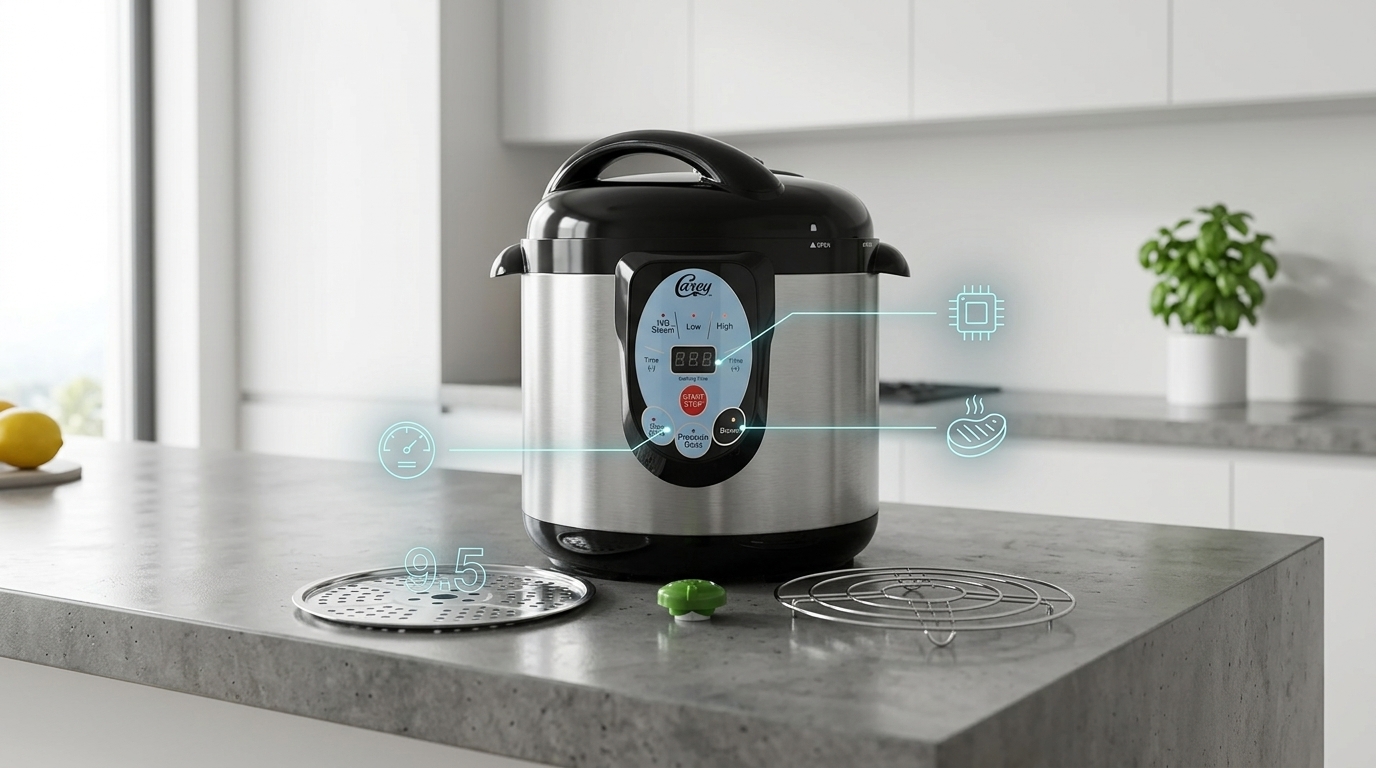
Home food preservation has undergone significant changes over the past decade, with electric pressure cookers and canners becoming increasingly popular alternatives to traditional stovetop methods. For those interested in home canning, meal preparation, or exploring pressure cooking techniques, having the right equipment can make a meaningful difference in your kitchen routine. The CAREY DPC-9SS represents an example of modern electric canning and cooking technology designed to handle multiple food preservation and cooking tasks.
This appliance positions itself in a particular niche—it’s not simply a multi-cooker that does some canning, nor is it exclusively a canning device that can’t handle everyday cooking. Understanding what this device actually does, how it works, and whether it aligns with your household needs requires looking beyond marketing claims and into the practical details of how it functions.
What Is This Appliance, Really?
The CAREY DPC-9SS is a 9.5-quart electric pressure cooker with a specific focus on pressure canning capabilities. To understand this distinction, it’s helpful to recognize that this device occupies a middle ground between general-purpose multi-cookers and specialized canning equipment.
Pressure canning is a specific food preservation method that relies on high temperatures (typically around 250°F) and elevated pressure to process low-acid foods like vegetables, meats, and soups. This is distinct from water bath canning, which uses boiling water (212°F) and works primarily for high-acid foods like pickles, jams, and fruit preserves. The CAREY DPC-9SS offers both methods, though it’s particularly designed around pressure canning functionality.
The appliance also functions as a pressure cooker for everyday cooking tasks, a slow cooker, and a steaming device. The manufacturing approach seems to recognize that households benefit from having equipment that can serve multiple purposes, rather than maintaining separate appliances for each function.
Key Features Explained
Capacity and Internal Design
At 9.5 quarts total volume, this device accommodates meaningful batch sizes for canning. The removable nonstick inner pot can process four quart-sized mason jars simultaneously, or five pint jars, or sixteen four-ounce jelly jars. This capacity matters—it’s large enough to make batch canning reasonably efficient, unlike smaller cookers where you’d process only one or two jars per cycle.
The nonstick coating on the aluminum inner pot serves a practical purpose beyond non-stick benefits; it prevents the chemical reactions that can occur when certain acidic foods contact bare metal. The pot being removable and dishwasher-safe addresses one of the genuine inconveniences of electric cooking devices—handwashing large pots can be tedious, and dishwasher compatibility makes cleanup less of a friction point.
Stainless Steel Construction
The exterior housing uses stainless steel, which isn’t simply for aesthetics. Stainless steel resists corrosion and performs well in kitchen environments where moisture and salt from food splatter are inevitable. The inclusion of side handles reflects practical thinking about an appliance that can weigh considerably when filled with jars and liquid for processing.
Safety Features and Pressure Control
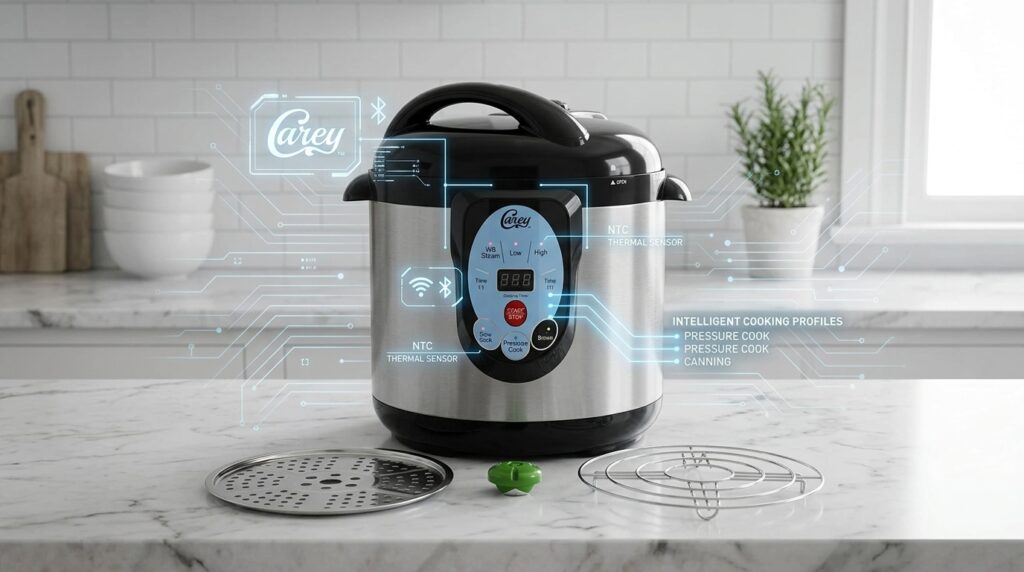
Multiple safety mechanisms work together in this device. The automatic locking lid prevents the lid from opening when pressure remains in the chamber—a critical safety feature in pressure cooking and canning. The float valve serves as both an indicator that pressure has been reached and a safety mechanism that rises when internal pressure builds.
The device includes pressure-limiting valves set at both 10 PSI and 15 PSI. This dual-valve system addresses a practical issue in North American food preservation: altitude affects water’s boiling point and the time required for safe food processing. Recipes and guidelines established by food safety experts account for altitude. Having both 10 PSI and 15 PSI capabilities allows the device to accommodate both sea-level and high-altitude canning safely.
Digital Controls and Preset Programming
The digital display with preset programs represents where this device’s design philosophy becomes visible. Rather than requiring users to manually calculate time and pressure settings, the preset programs handle this automatically. This approach recognizes that pressure canning does involve specific, precise requirements—too little time or pressure can lead to food spoilage or safety issues, while excessive pressure serves no purpose.
The timer functionality works in both directions—counting down during the processing period and remaining on display afterward to help users track when processing has completed.
Included Accessories
The device ships with two racks: one specifically designed for canning that elevates jars off the bottom of the pot, and one steam rack for other cooking applications. A removable condensation catcher is included as well—this addresses the reality that pressure cooking generates steam and condensation that would otherwise drip back into food. While this might seem like a minor detail, anyone who has cooked with covered pots knows that condensation managing itself back into food can water down dishes or dilute flavors.
How You Might Use This Device
Pressure Canning Applications
The device supports pressure canning of low-acid foods, which is the category that genuinely requires pressure processing for safety. This includes most vegetables (except pickles), meats, poultry, seafood, and combination dishes. Beginners to this process often start with pressure canning recipes that have established, tested guidelines. The USDA and National Center for Home Food Preservation provide tested recipes specifically for pressure canning.
Someone interested in preserving vegetables from a garden, processing home-raised meat, or making shelf-stable prepared meals for emergency storage would use this mode of operation.
Water Bath and Pickling
While the device includes water bath capability, this function tends to be simpler to execute in a dedicated water bath canner or even a stockpot. However, the functionality exists for those who want to use a single appliance for both methods.
Pressure Cooking
Using the CAREY DPC-9SS as a straightforward pressure cooker follows the same principle as multi-cookers and instant pots—liquids reach higher temperatures under pressure, allowing foods to cook faster while retaining moisture. Tough cuts of meat become tender, dried beans rehydrate and soften quickly, and one-pot meals come together efficiently. The 9.5-quart capacity makes it suitable for larger household quantities or preparing multiple servings for storage.
Slow Cooking
Beyond pressure cooking, the device functions as a slow cooker, using low heat over extended periods. This mode requires no pressure and appeals to anyone who prefers the traditional approach of putting ingredients in before leaving for work and having dinner ready when returning home.
Steaming and Warm Functions
The steam rack accommodates steaming vegetables, seafood, or other foods that benefit from moist heat without direct contact with boiling liquid. The warm setting helps keep prepared food at serving temperature if timing coordination is needed.
Who Might Find This Device Suitable
Home Gardeners
Households with vegetable gardens, fruit trees, or access to bulk produce at farmers’ markets often preserve the harvest. The processing capacity and preset programs handle batch preservation efficiently without requiring extensive prior knowledge of canning procedures.
People Interested in Food Independence
Some households pursue food preservation partly for self-sufficiency—building shelf-stable food stores that don’t depend on grocery supply chains. The ability to preserve low-acid foods (which require pressure canning) makes this feasible.
Families Managing Dietary Restrictions
Home canning allows people to control exactly what goes into preserved foods. Those avoiding certain additives, managing sodium intake, or with specific dietary preferences can prepare foods to their specifications and can them for later use.
Households at Higher Altitudes
The dual 10 PSI and 15 PSI pressure settings address a legitimate challenge for people living above 1,000 feet elevation, where atmospheric pressure affects processing requirements. Standard electric canners sometimes don’t accommodate altitude variation, making this feature particularly relevant.
Cooks Who Value Versatility
The multi-function design appeals to kitchens where space is limited or where investment in multiple single-purpose devices isn’t practical. Having pressure cooking, slow cooking, and canning capability in one appliance reduces clutter and specialized equipment.
People Learning Canning
The preset programs and digital display take much of the guesswork out of pressure canning, which can feel intimidating initially. This approach to automation reduces the common mistake of under-processing or over-processing foods.
Important Considerations Before Adopting This Device
Learning Curve and Safety
While the device automates pressure management, successful food preservation requires understanding food safety principles. Pressure canning involves processing foods at temperatures and pressures specifically calculated by food safety experts. Using recipes that haven’t been tested by established sources like the USDA or National Center for Home Food Preservation can result in spoiled food or unsafe preserves.
This isn’t a criticism of the device—it’s reality for all pressure canning, regardless of equipment. The device makes things safer by automating pressure and time, but it doesn’t eliminate the need for the user to select appropriate recipes and follow proper procedures.
Space and Storage
A 9.5-quart appliance occupies meaningful counter or storage space. Households with limited kitchen space need to consider whether they’re prepared to dedicate that space or where the device would be stored.
Initial Investment
Electric canners and multi-function pressure cookers represent an upfront investment. This makes sense for households that will use the device regularly, but occasional users might find the cost-per-use to be less favorable.
Processing Only Low-Acid Foods
Pressure canning requirement applies to low-acid foods. High-acid foods like pickles, jams, and fruit preserves can be successfully processed using water bath methods in far simpler equipment. If your preservation goals are primarily jam or pickle-focused, a dedicated water bath canner or large pot might serve you better.
Altitude Requirements
If you live at a significantly high altitude where 15 PSI isn’t sufficient, or at altitudes where the device’s standard pressure settings don’t align, you’d need to verify the device’s specifications match your location’s requirements.
Mastering Everyday Cooking Functions
While the preset programs handle canning automatically, using the device for regular pressure cooking, slow cooking, and steaming requires developing familiarity with how it operates. This learning period is normal but worth acknowledging.
How This Compares Within Broader Categories
Versus Traditional Stovetop Canners
Stovetop pressure canners have been the standard equipment for pressure canning for decades. They’re less expensive initially and require no electricity. However, they require the operator to monitor pressure manually, watching a gauge and adjusting heat to maintain consistent pressure. This demands attention and develops a learning curve for achieving consistent results. Electric models automate pressure management, reducing user error and attention requirements.
Versus General-Purpose Multi-Cookers
Many households now own multi-cookers designed primarily for pressure cooking, slow cooking, and rice preparation. These devices are typically smaller (4-8 quarts) and don’t include pressure canning capability. They’re more affordable and require less space. However, they can’t safely process low-acid foods using pressure canning methods. If canning isn’t a goal, a smaller multi-cooker might serve a household better.
Versus Dedicated Water Bath Canners
Electric water bath canners exist specifically for heat-processed foods at the water bath temperature (212°F). They’re simpler devices with fewer functions and lower cost. If your preservation goals involve only high-acid foods (jams, pickles, fruit), a dedicated water bath canner suffices.
Versus Professional or Commercial Equipment
Home food preservation equipment exists in a different category from commercial canning equipment. A 9.5-quart capacity serves home and small-batch purposes well but would be impractical for commercial production volumes.
Frequently Asked Questions
Can I use this device if I live at high altitude?
Yes, provided your altitude aligns with the device’s pressure settings. The dual valves (10 PSI and 15 PSI) accommodate altitudes from sea level through approximately 2,500 feet. Beyond that, you’d want to verify the specific altitude requirements in your area and confirm they match the device’s capabilities.
What’s the difference between pressure canning and pressure cooking?
Pressure canning processes foods to achieve specific safety results—making low-acid foods shelf-stable by eliminating harmful microorganisms. Pressure cooking simply uses pressure and heat to cook foods faster. The CAREY DPC-9SS does both, but they’re distinct processes with different purposes.
Do I need to know canning procedures before using this device?
Yes. The device automates pressure and time management, but selecting appropriate recipes, preparing foods correctly, and following food safety procedures remain the user’s responsibility. Resources like the USDA Complete Guide to Home Canning or the National Center for Home Food Preservation provide tested recipes and procedures.
Can I can everything in this device?
No. Only low-acid foods should be pressure canned. High-acid foods (pickles, jams, fruits) are safely processed using water bath methods. Recipes specify which method applies to which foods.
What if pressure canning isn’t my interest—is this still useful?
Yes. As a pressure cooker, slow cooker, and steamer, it functions similarly to multi-cookers. The larger capacity (9.5 quarts) suits larger households or batch cooking. However, if pressure canning doesn’t appeal to you, a general-purpose multi-cooker might be more cost-effective.
Is the nonstick coating food-safe?
Nonstick coatings used in modern cookware meet food safety standards. The removable pot is dishwasher-safe, and manufacturers specify care instructions you can review.
How much electricity does this use?
Pressure cookers and canners do draw meaningful power during operation. If energy consumption is a concern, you can review the wattage (typically found in product specifications) and calculate approximate usage based on your electricity rates.
Can I use this device with a generator?
Electric pressure cookers require stable power delivery. Generators can work, though some experts recommend avoiding surge-prone power sources with sophisticated electronics. If you plan to use a generator, researching generator-appliance compatibility is advisable.
Where can I find recipes designed for electric pressure canners?
The National Center for Home Food Preservation has developed tested recipes specifically for electric pressure canners. The USDA Complete Guide to Home Canning provides the foundation of tested canning procedures. Some recipe books specifically address electric pressure canning as well.
Maintenance and Longevity
Like any kitchen appliance, the device benefits from proper maintenance. Checking the gasket (sealing ring) on the lid periodically, cleaning the locking mechanism, and ensuring the condensation catcher is emptied and cleaned after use all contribute to reliable operation.
The stainless steel exterior responds well to ordinary stainless steel cleaning. The nonstick inner pot benefits from hand-washing rather than abrasive scrubbing, despite dishwasher-safe designation.
The electronics and pressure mechanisms, like those in any electric appliance, have a lifespan. Quality construction contributes to longevity, but eventual replacement should be anticipated rather than treated as surprising.
Conclusion
The CAREY DPC-9SS Smart Electric Pressure Cooker and Canner addresses a specific intersection of household needs—the desire to pressure can foods safely and reliably, combined with the practical need for versatile cooking equipment. It’s not the right solution for every household, nor should it be viewed as a necessity for everyone.
For households that include people interested in food preservation, have space to accommodate the device, and appreciate consolidated kitchen equipment that handles multiple functions, the capabilities it offers are relevant. For others whose cooking needs center on everyday meal preparation without preservation goals, other multi-cookers might serve better.
The device’s design reflects a thoughtful approach to automation and safety in a specialized area—pressure canning—while maintaining practical value for general cooking applications. Understanding what it actually does versus what marketing language suggests is the foundation for making an informed decision about whether it aligns with your kitchen’s needs.